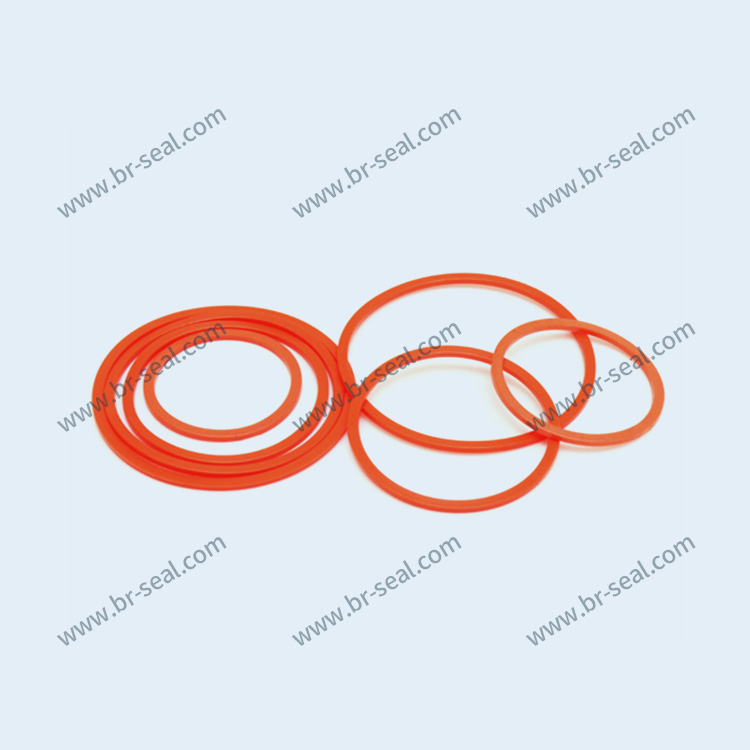
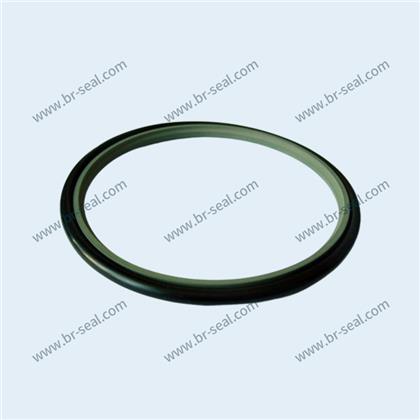
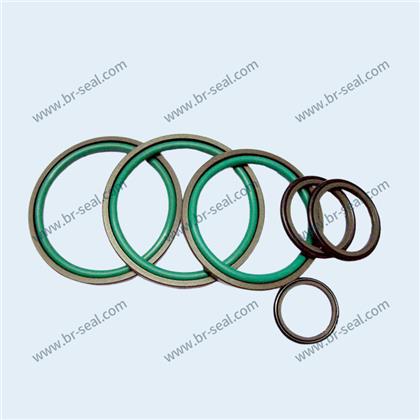
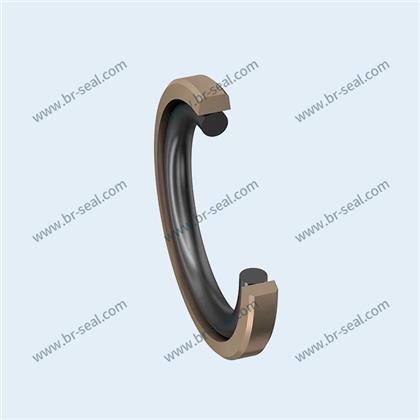
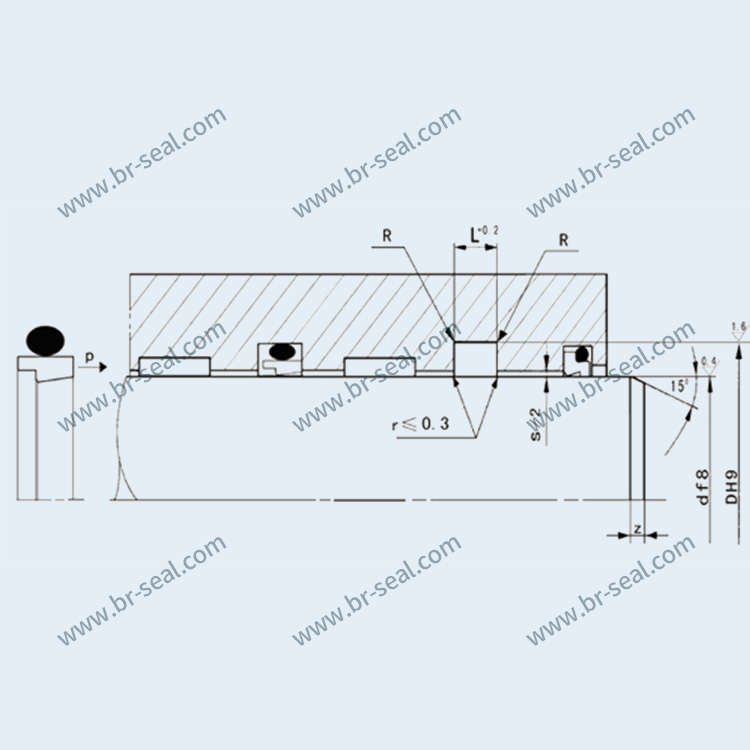
斯特封(活塞杆轴用)
|
品牌 |
勃茸 |
|
是否标准件 |
是 |
|
可售卖地 |
全国 |
|
备注 |
可根据客户图纸要求设计 |
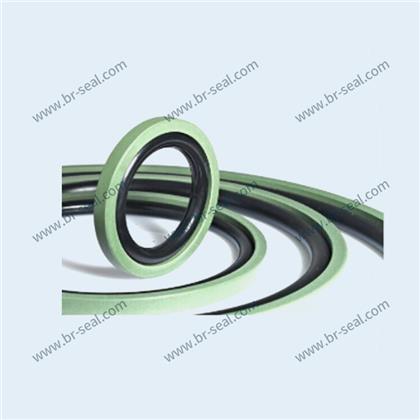
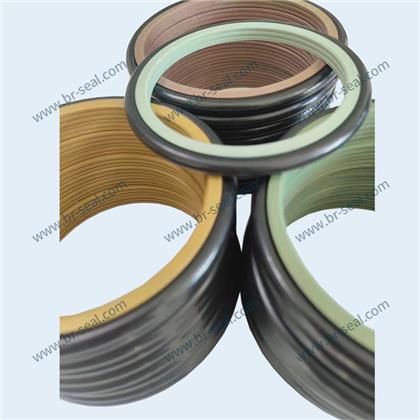
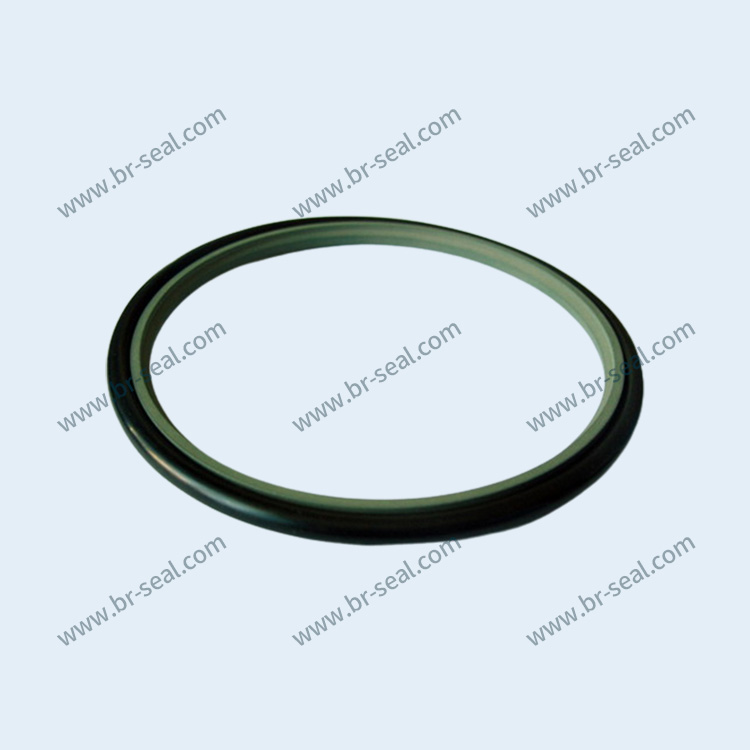
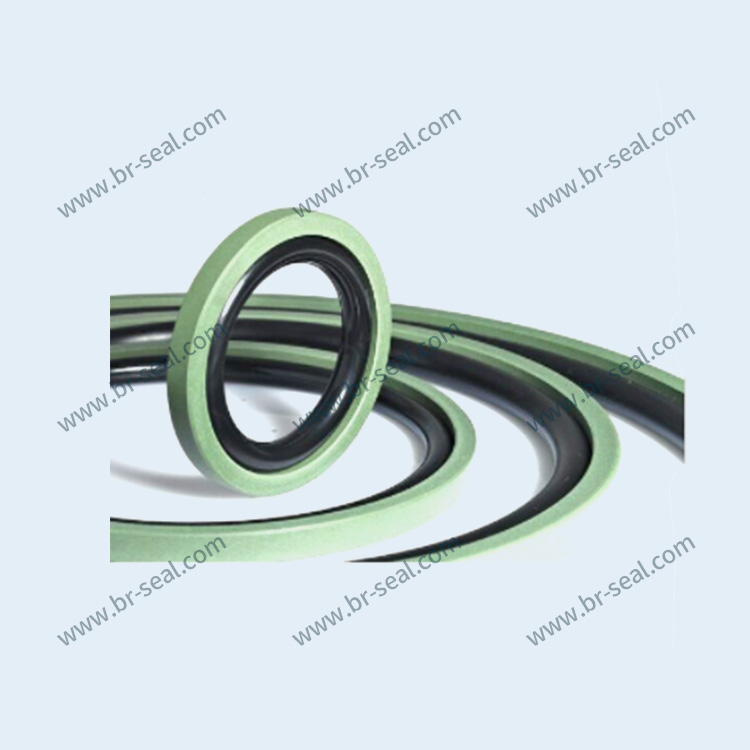
目前主要应用于液压系统内液压缸的密封或用于活塞或活塞杆的密封。在低磨擦阻力的状况下,Glyd Ring&Step Seal可使被密封的产品的泄漏量控制到级佳的状态。
工作压力:较高70Mpa
运功速度:较大15m/s
工作温度:-30~120℃(丁腈橡胶O型圈);-30~200℃(氟橡胶O型圈)
较低的磨擦阻力,没有爬行的现象;
不管是动态还是静态的密封效果都比较好;
没有粘滞现象;
在有润滑和无润滑时性能都很不错;
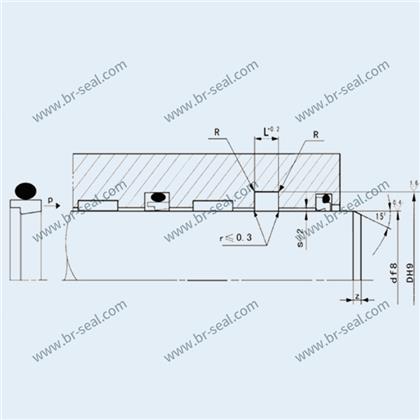
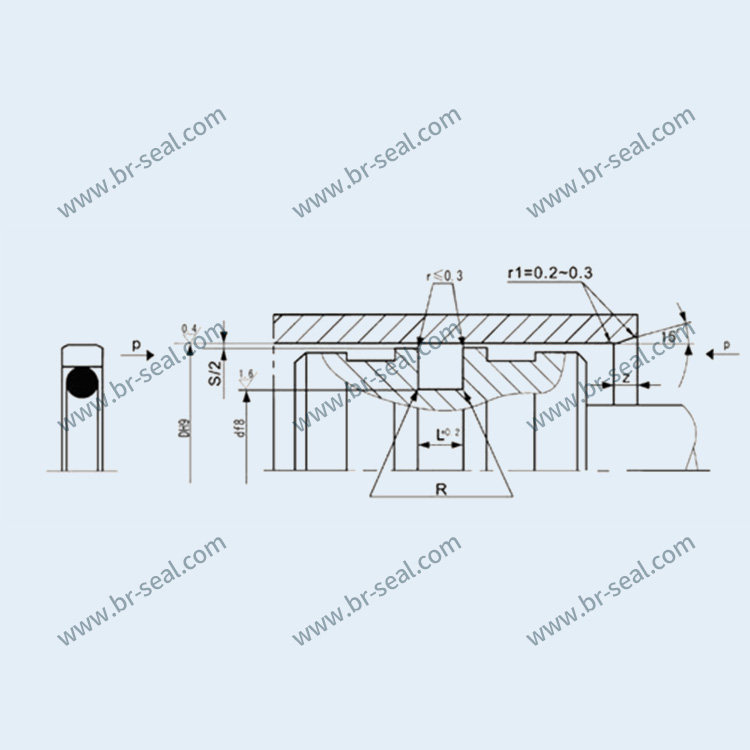
密封圈的沟槽结构比较简单;
非常耐高压,工作条件适应性很强;
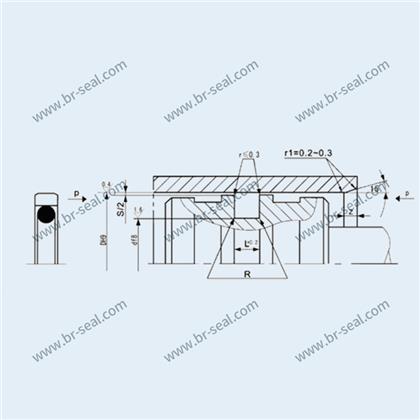
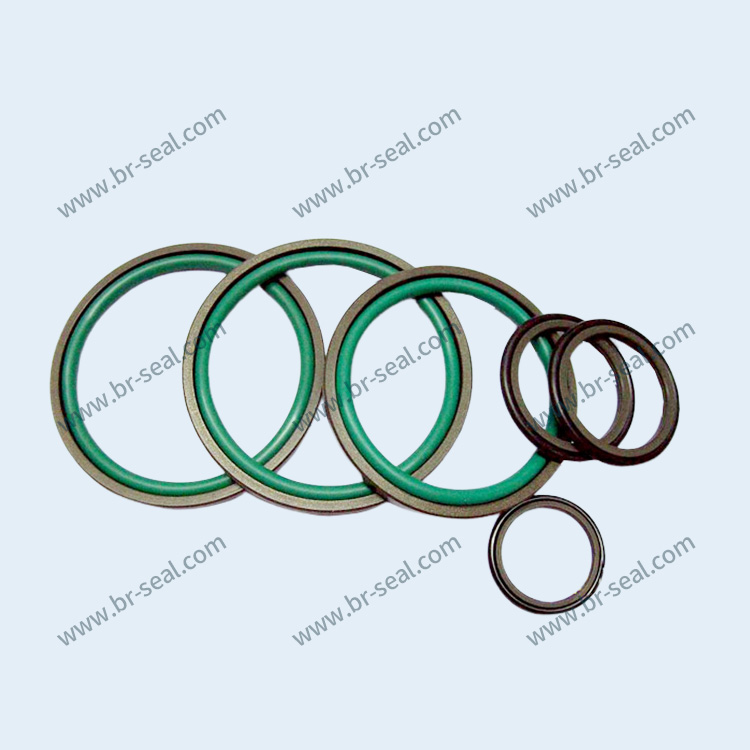
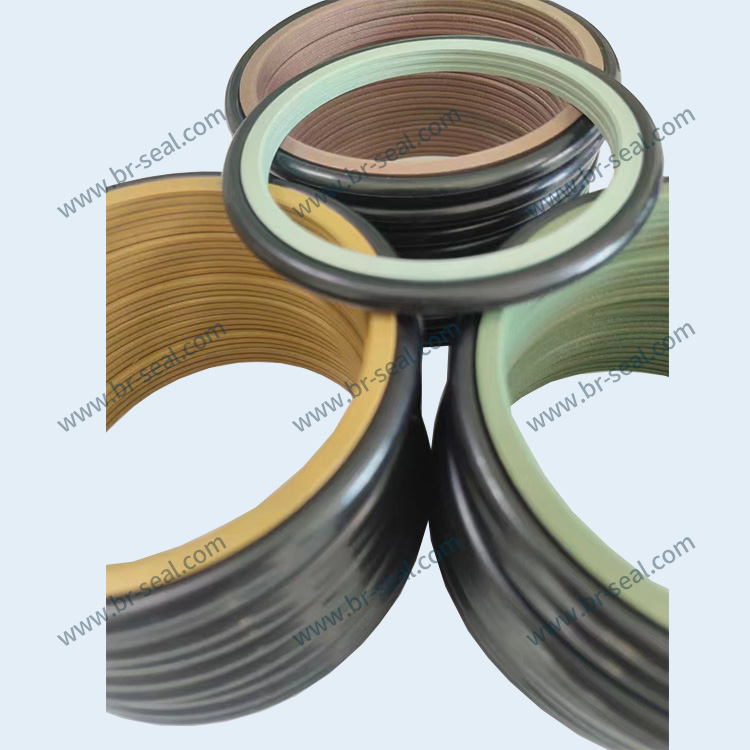
有多种规格尺寸可选,Glyd Ring能够适用于较大直径2500mm的液压缸,而Step Seal能够适用于在较大直径为1330mm的任何活塞与活塞杆。
Glyd Ring密封原理;
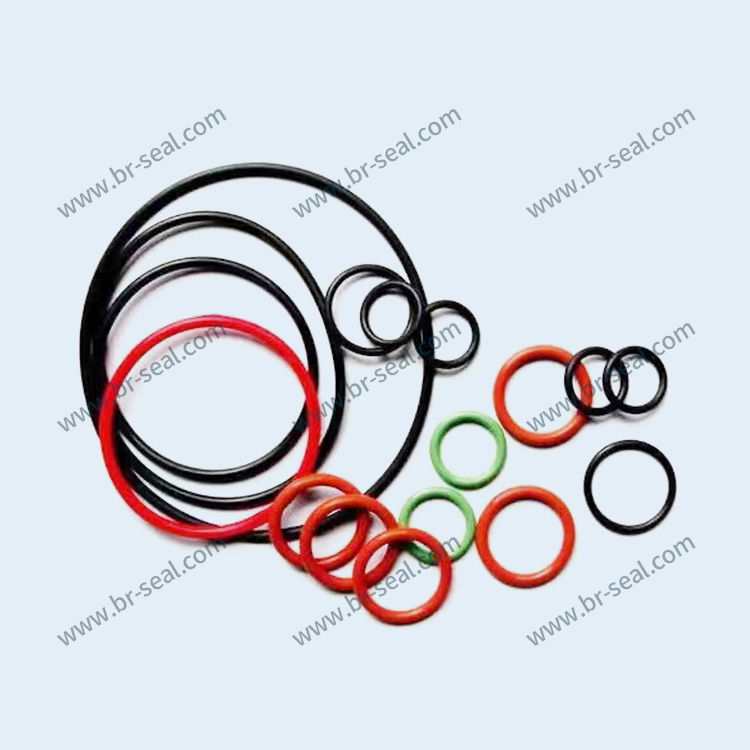
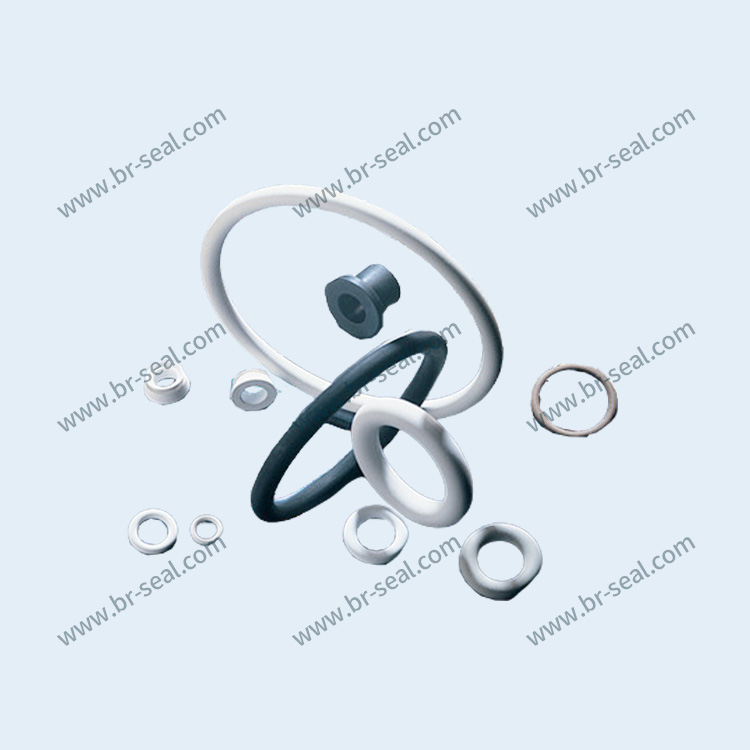
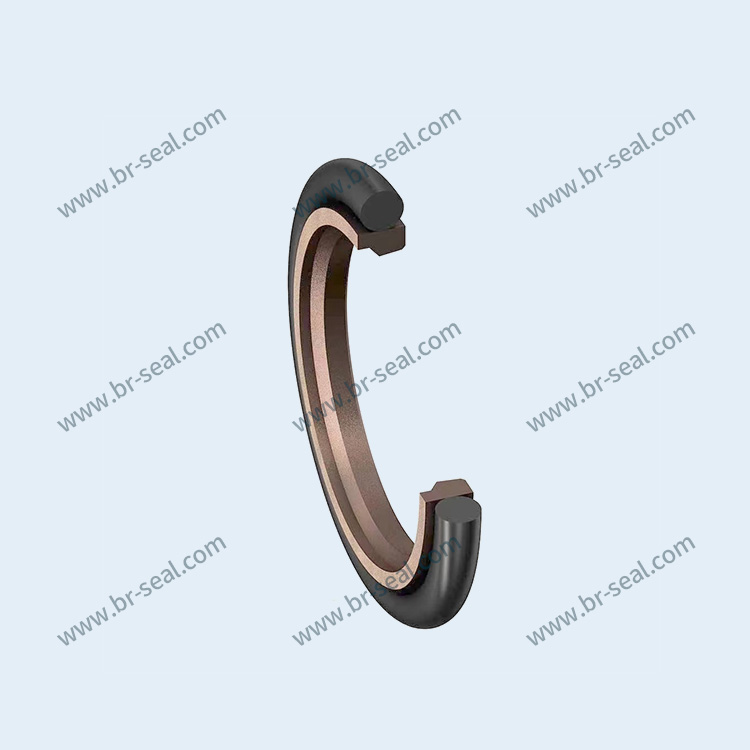
Glyd Ring为矩形截面环形体。它组成的组合密封装置,无论作孔用密封或轴用密封,都为双向密封。实际使用中它一般是作孔密封。PTFE呈白色,有级低的摩擦因数(0.02~0.04),自润滑性能好、耐温、耐腐蚀、电绝缘性能均佳。但缺点是不耐磨、具有冷流性、热胀系数大、导热性差,且硬度、机械强度不高,故不宜独立作密封件。但填充PTFE材料会获得明显的改善。在PTFE中填充经得住380℃以上高温的填充物,如青铜粉、玻璃纤维、碳-石墨、二硫化钼、二氟化硅等后,PTFE会对钢表面形成良好摩擦副,从而分别提高机械强度,耐磨性、耐水性、导热性等,以这样的材质制成矩形截面的圆环在组合密封装置中,其外圆面直接与缸筒的内壁接触,就可以承受高压与高的相对速度,而它的内圆面直接与富于弹性元件O形合成橡胶圈接触,当它们共同装在活塞槽内并与液压缸总成后,依其本身的变形对密封面产生较高的初始接触应力,阻止无压力或微压力液体泄漏。当液压缸工作时,有压液流体的压力增大,弹性元件O形合成橡胶体受到轴向压力,而径向有扩张趋势。0形圈的弹性变形始终挤压,填充的PTFE矩形环套,使矩形圆环外圆面随液流体压力增加而加大对缸内壁的接触应力,这种附加接触应力与初始接触应力之和大于液流体工作介质压力,故阻止液流体泄漏。
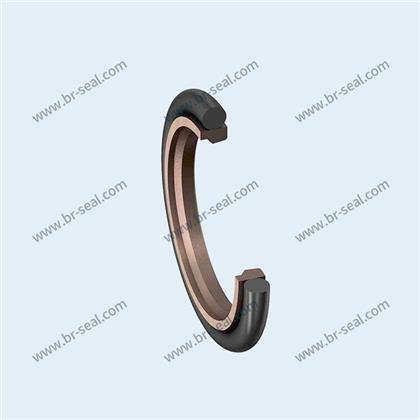
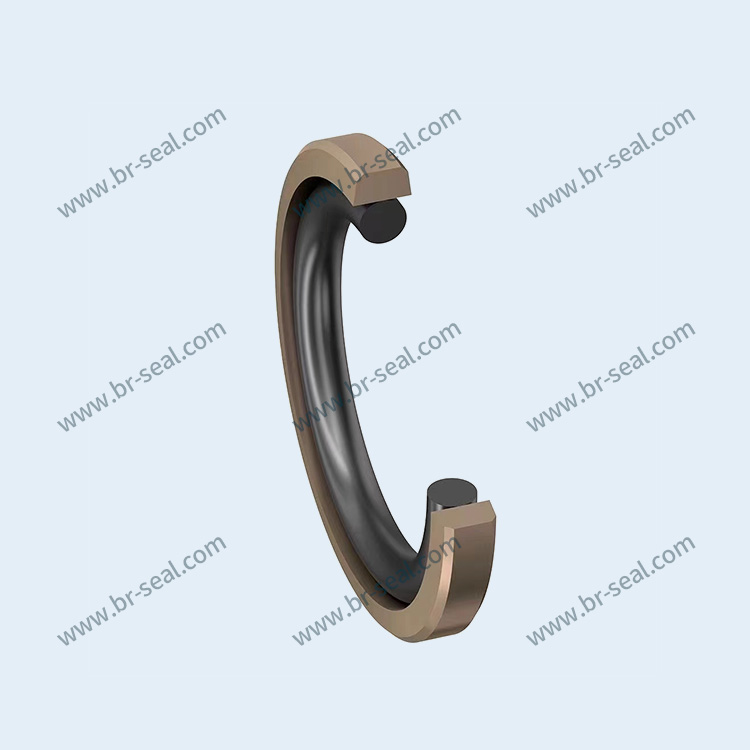
Step Seal密封装置为单向密封,其密封原理与Glyd Ring相似,首先它是利用不同材质优良的性能,继之以各种合理的结构密封圈组合而成。 以填充PTFE制成阶梯形式的密封圈,它具有机械强度、硬度、刚度高,耐压、耐磨及摩擦因数低,具有自润滑特性,它的阶梯面直接与被密封轴圆柱面接触,而富有弹性的元件O形合成橡胶圈一边紧紧与它接触另一边与沟槽底相紧靠位于固定套内与活塞总成后,填充PTFE阶梯密封圈受O形合成橡胶弹力作用而紧紧贴住活塞杆圆柱面,阻止无压力或微压力液流体泄漏,随着液压缸工作,液体工作介质压力升高,密封组合圈中尤其富有弹性的元件O形合成橡胶圈受轴向力增大,有被压缩趋势,则径向就有扩张趋势,也就填充PTFE阶梯圈受更大的压力,则密封更与活塞贴紧,密封力更大,就阻止有较大压力液体泄漏。随着流体工作介质压力升高,密封面宽度增加,斜角α减小,使高压侧压力分布曲线上升的斜率始终很陡,同时低压侧压力分布曲线的下降斜率保持有利的数值,故其泄漏量很小。
Glyd Ring广泛适用于石油基液压油、环保安全液压油等,具体做什么用途要看O型圈的材质。Step Seal主要用于往复运动的柱塞和活塞杆,如挖掘机、压力机、装载机、冶金机械、化工机械等场合。
Glyd Ring分为孔用Glyd Ring和轴用Glyd Ring,其滑环的截面是矩形的,其中孔用Glyd Ring主要装在孔上使用,它的O型圈在内侧,滑环在外侧;而轴用Glyd Ring主要装在轴内使用,它的O型圈在外侧,滑环在内侧。Glyd Ring不但可以用在单向压力的地方,而且也可以用在双向压力的地方。
Step Seal也可以分为孔用Step Seal和轴用Step Seal,其滑环的截面在与轴/孔壁有相对运动的一侧有台阶。孔用Step Seal主要在孔上使用,它的O型圈在内侧,滑环在外侧;而轴用Step Seal主要在轴内使用,它的O型圈在外侧,滑环在内侧。Step Seal主要用在单向压力的地方,在安装时要注意掌握好方向,滑环台阶朝向有压力的一侧。而在双向压力的地方要用两个背靠背的Step Seal。
外形结构区别:两者的密封环结构不一样,Glyd Ring的密封圈是平面的,而Step Seal的密封圈是带台阶的。
两者作用力区别:Glyd Ring为一种双向作用力的密封圈,能够密封两个方向的压力,而Step Seal则是一种单向作用力的密封圈,只能够密封一个方向的压力。
Glyd Ring&Step Seal is a common seal product, which is composed of a rubber O-ring and a PTFE ring. The O-ring is a force-applying component that provides sealing force and compensates for the PTFE ring. effect.
At present, it is mainly used for the sealing of hydraulic cylinders in hydraulic systems or for the sealing of pistons or piston rods. Under the condition of low friction resistance, Glyd Ring&Step Seal can control the leakage of the sealed product to an excellent state.
Performance parameters:
Working pressure: up to 70Mpa
Movement speed: maximum 15m/s
Working temperature: -30~120℃(NBR O-ring); -30~200℃(Fluoroelastomer O-ring)
Features:
Low friction resistance, no crawling phenomenon;
Whether it is dynamic or static sealing effect is better;
There is no sticking phenomenon;
The performance is very good with and without lubrication;
The groove structure of the sealing ring is relatively simple;
Very high pressure resistance, strong adaptability to working conditions;
Available in a variety of sizes, Glyd Ring can fit hydraulic cylinders up to 2500mm in diameter, while Step Seal can fit any piston and piston rod up to 1330mm in diameter.
Sealing principle:
Glyd Ring sealing principle;
Glyd Ring is a rectangular cross-section annular body. The combined sealing device composed of it is a two-way seal, whether it is used as a hole seal or a shaft seal. In actual use, it is generally used for hole sealing. PTFE is white, has a very low friction coefficient (0.02 ~ 0.04), good self-lubricating performance, temperature resistance, corrosion resistance, and electrical insulation properties. However, the disadvantage is that it is not wear-resistant, has cold flow, large thermal expansion coefficient, poor thermal conductivity, and low hardness and mechanical strength, so it is not suitable for independent sealing. But filled PTFE material will get significant improvement. After filling PTFE with fillers that can withstand high temperature above 380 °C, such as bronze powder, glass fiber, carbon-graphite, molybdenum disulfide, silicon difluoride, etc., PTFE will form a good friction pair on the steel surface, thereby improving the Mechanical strength, wear resistance, water resistance, thermal conductivity, etc., a circular ring with a rectangular section made of such a material can withstand high pressure and high pressure in the combined sealing device. Relative speed, and its inner circular surface is in direct contact with the O-shaped synthetic rubber ring, which is rich in elastic elements. Initial contact stress to prevent leakage of non-pressure or micro-pressure liquids. When the hydraulic cylinder is working, the pressure of the pressurized fluid increases, and the O-shaped synthetic rubber body of the elastic element is subjected to axial pressure, and the radial direction has a tendency to expand. The elastic deformation of the O-ring is always extruded, and the filled PTFE rectangular ring sleeve makes the outer surface of the rectangular ring increase the contact stress on the inner wall of the cylinder with the increase of the fluid pressure. The sum of this additional contact stress and the initial contact stress It is greater than the pressure of the working medium of the liquid fluid, so the leakage of the liquid fluid is prevented.
Step Seal sealing principle:
The Step Seal sealing device is a one-way seal, and its sealing principle is similar to that of Glyd Ring. First, it is composed of the excellent performance of different materials, followed by a combination of various most reasonable structural sealing rings. The sealing ring is made of filled TPFE in the form of a ladder. It has high mechanical strength, hardness, rigidity, pressure resistance, wear resistance and low friction coefficient, and has self-lubricating properties. Its stepped surface is directly in contact with the cylindrical surface of the sealed shaft, while The elastic element O-shaped synthetic rubber ring is in close contact with it on one side, and the other side is in close contact with the bottom of the groove. It is located in the fixed sleeve and after the piston assembly, and the filled TPFE step sealing ring is tightly attached by the elastic force of the O-shaped synthetic rubber. Hold the cylindrical surface of the piston rod to prevent the leakage of no-pressure or micro-pressure liquid fluid. With the operation of the hydraulic cylinder, the pressure of the liquid working medium increases, and the O-shaped synthetic rubber ring, which is a particularly elastic element in the sealing combination ring, is increased by the axial force. If there is a tendency to be compressed, the radial direction will have a tendency to expand, that is, the filled TPFE stepped ring will be subjected to greater pressure, and the seal will be closer to the piston, and the sealing force will be greater, preventing the leakage of liquid with greater pressure. As the pressure of the fluid working medium increases, the width of the sealing surface increases, and the inclination angle α decreases, so that the rising slope of the high-pressure side pressure distribution curve is always steep, while the falling slope of the low-pressure side pressure distribution curve maintains a favorable value, so its leakage Quantity is small.
Industry use:
Glyd Ring is widely used in petroleum-based hydraulic oil, environmentally safe hydraulic oil, etc. The specific use depends on the material of the O-ring. Step Seal is mainly used for reciprocating plungers and piston rods, such as excavators, presses, loaders, metallurgical machinery, chemical machinery and other occasions.
Difference between Glyd Ring & Step Seal:
Glyd Ring is divided into Glyd Ring for hole and Glyd Ring for shaft. The cross-section of the slip ring is rectangular. The Glyd Ring for hole is mainly used on the hole, its O-ring is on the inside, and the slip ring is on the outside. The Glyd Ring is mainly installed in the shaft, its O-ring is on the outside, and the slip ring is on the inside. Glyd Ring can be used not only where there is one-way pressure, but also where there is two-way pressure.
Step Seal can also be divided into Step Seal for hole and Step Seal for shaft. The cross-section of the slip ring has a step on the side that has relative motion with the shaft/hole wall. The Step Seal for hole is mainly used on the hole, its O-ring is on the inside, and the slip ring is on the outside; while the Step Seal for shaft is mainly used in the shaft, its O-ring is on the outside, and the slip ring is on the inside. Step Seal is mainly used in places with one-way pressure. When installing, pay attention to the direction, and the step of the slip ring faces the pressure side. Where there is bidirectional pressure, use two Step Seals back-to-back.
Difference in shape and structure: The sealing ring structure of the two is different. The sealing ring of Glyd Ring is flat, while the sealing ring of Step Seal is stepped.
The difference between the two forces: Glyd Ring is a two-way force seal, which can seal the pressure in two directions, while Step Seal is a one-way force seal, which can only seal the pressure in one direction.